

MAVA Collogues,
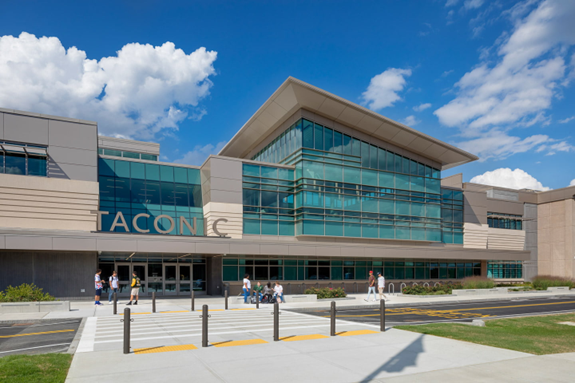
Exciting news from MAVA member Taconic High School in Pittsfield. Taconic High School students are building for Habitat for Humanity
We congratulate our colleagues for expanding opportunities for their Chapter 74 vocational technical students, while providing an invaluable service to their community!!
Outstanding effort students and staff!!
David
Take a look inside the house Taconic High School students are building for Habitat for Humanity
The partnership adds to the affordable housing stock as well as the county’s workforce of skilled laborers.
PUBLISHED Thursday, October 1, 2026
<![if !vml]>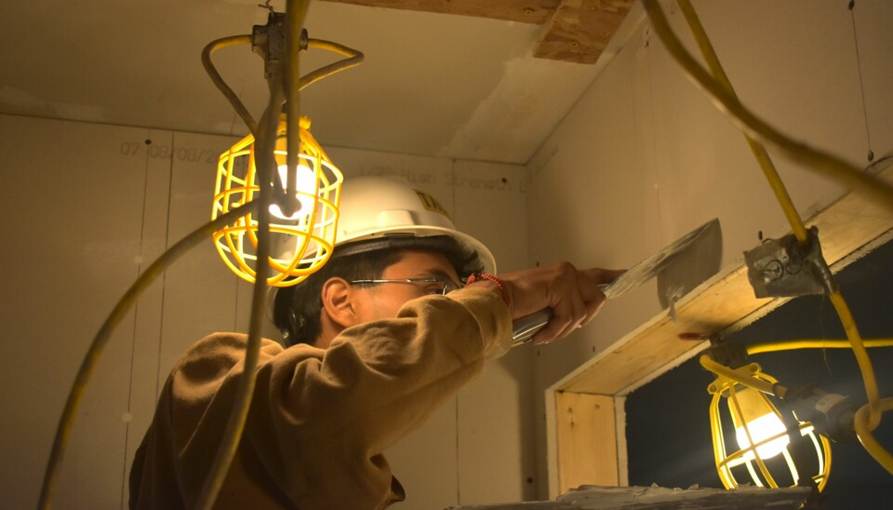 <![endif]>
Darent Arevalo, a senior in Taconic’s carpentry program, spackles the wall.
PITTSFIELD — When some of Taconic High School‘s carpentry, electrical, metal fabrication and horticulture students graduate this year, their work will have already built a house.
It’s something they said they’ll be proud of for years.
Taconic is partnering with Central Berkshire Habitat for Humanity to build a home that will eventually be sold at an affordable level to a family. Those students building the home are getting valuable hands-on experience, a head start in their career and a tangible, long-standing project they can point to.
"We’re a part of the house, the house is a part of us, and it’s a testament to us," said Jacob Schweizer, a senior in the carpentry program.
The home, at 37 Curtis Terrace, had its foundation poured last winter and carpentry students, including Schweizer, worked on framing the home throughout the spring. Now, Schweizer and his carpentry class are finishing the drywall while another Taconic class, studying electrical work, is in the basement wiring the home.
<![if !vml]>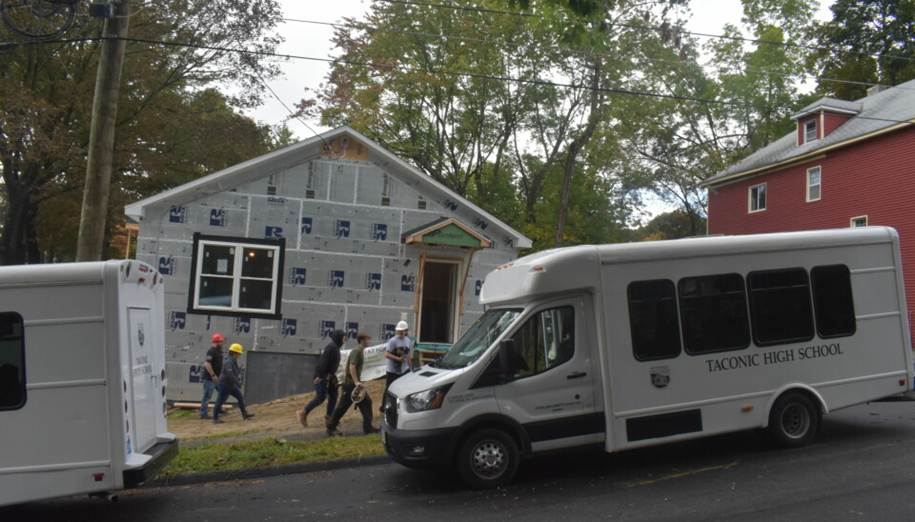 <![endif]>
Taconic High School students are helping Central Berkshire Habitat for Humanity build a home. The high schoolers have done everything so far, except for setting the initial foundation.
"It’s just been one of the most fantastic partnerships that we’ve had thus far," said Marcie Simonds, supervisor of career and technical education at Taconic.
Habitat CEO Carolyn Valli said the students’ efforts help address two issues critical to the Berkshires by "creating more affordable homeownership opportunities and developing the next generation of skilled tradespeople."
For the school, the on-site experience allows students to study and hone their skills outside of the controlled environment of the school’s workshop, Simonds said.
Central Berkshire Habitat for Humanity hosts open house for Prosperity Way homes
<![if !vml]>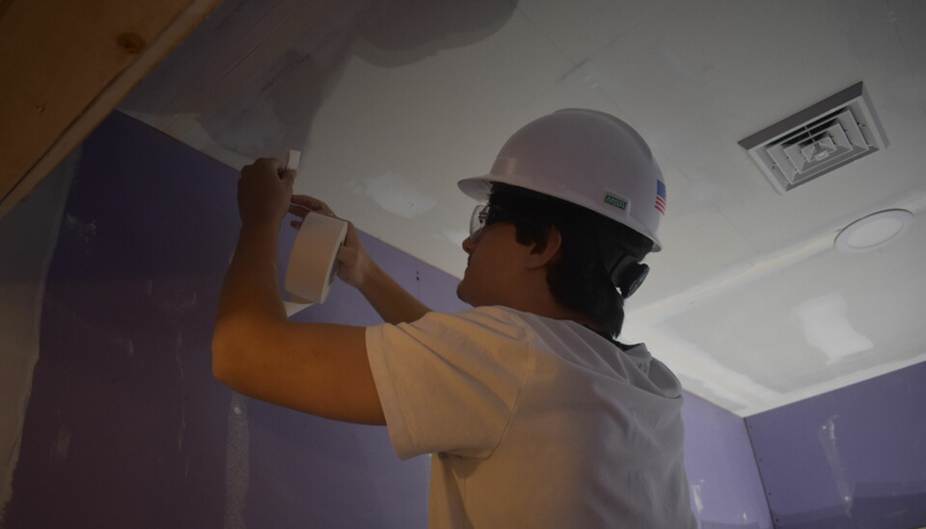 <![endif]>
For Schweizer, that means learning skills like understanding the most efficient way of using drywall. "It’s realistic," he said. "It’s what you’ll do on the real job site."
Another reason working on-site differs from the school shop is that the students’ work won’t be taken down to be reused. It’s going to be a part of a home.
"We would work in the shop," said Jason Richardson, a Taconic teacher and experienced contractor. "They would do some demonstrations, some framing in the shop, and then we’d have to pull it apart and reuse it."
"There’s a lot more purpose for them," Richardson said. "They’re gonna drive by it, and they’re gonna know they built this house."
For the students helping wire the house, that actually came with some anxiety.
Giacobe Cimini, a senior in Taconic’s carpentry program, said, "We actually get to, instead of taking it down, reusing the scrap wood, we get to put up real walls, and it’s gonna be permanent, so we can actually be a little more precise with everything that we’re doing." NATE HARRINGTON — THE BERKSHIRE EAGLE
"You definitely don’t want to mess it up," said JP Discoe, a senior studying electrical work. "There’s always the teacher that’s going to be checking behind us, but you just gotta move slow and take your time."
Still, the controlled setting gives students the chance to learn, have oversight and work all at the same time, said Donovan Keser, another senior studying electrical.
That experience matters, as it can help cut down on the time needed for aspiring electricians to get their certification, said Bill DeMarco, the electrical teacher.
It takes 8,000 hands-on working hours and 600 classroom hours for an electrician to get their license, which DeMarco said takes about four years.
More than 80 volunteers help build affordable homes at Prosperity Way in Great Barrington
Avangrid volunteers helped Habitat build homes to be sold at affordable level.
<![if !vml]> <![endif]>However, through Taconic, students can earn half of those classroom hours, DeMarco said. Most students earn close to 1,000 hours of hands-on experience.
Upon graduating, "they have about three to three and a half years of work left to do, about two years of night classes to finish getting their classroom hours," he said.
Richardson, who owns his own contracting business, said he would hire "most students" to work for him, saying they also have many soft skills needed for the field.
"We push a lot of employability skills and work ethic," he said. "They’re here, they work hard. We come here first thing in the morning, they eat lunch here, and we don’t go until the end of the day."
Costs for the project are approximately $400,000, Valli said.
The final price of the home has not been determined and won’t be set until the time of sale, as the price is determined by the buyer’s income relative to the area median income, Valli said. The buyer has already been selected.
Beyond the creation of affordable housing, the partnership and the project are at the core of Habitat’s mission of bringing people together to build homes and community, Valli said.
"That is the kind of partnership we want to continue building — one where education, workforce development and affordable housing all reinforce one another," she said.
Chapter 74 Vocational Technical & Agricultural Education
LEARNING THAT WORKS FOR MASSACHUSETTS
David J. Ferreira
MAVA Communications Coordinator
DavidFerreira