



MAVA Regional Vocational & Agricultural School Superintendents, Non-Regional Board of Directors, Vocational Coordinators, Steve, & Peter,
We are pleased to share this LinkedIn message from Rachael Mann Executive Director of NCLA. The U.S. Department of Labor has released its official AI Literacy Framework!
We strongly encourage your review of this post and share it with appropriate members of your staff.
Thanks in advance for your consideration.
David

Rachael Mann M.Ed., AI in CTE Strategist | Author of Pack Your Bags for an AI-Driven-Future.
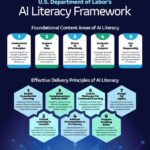
The U.S. Department of Labor has released its official AI Literacy Framework, and if you are in an education or workforce development profession, this is a must-read. The framework provides a working definition of AI literacy, foundational content areas, and delivery principles to help prepare students and job seekers for an AI-driven economy.
✔️ DOL defines AI literacy as a foundational set of competencies with a primary focus on generative AI, which it identifies as increasingly central to the modern workplace. Baseline AI literacy skills are now expected across all industries.
✔️ The framework stresses that AI literacy should not be taught as an abstract, standalone topic. Educators are encouraged to embed AI tools into real workflows, industry-specific scenarios (including CTE programs and apprenticeships), and everyday tasks so learning is directly applicable.
✔️ Amplify human skills: AI is framed as a tool that augments workers, not a one-for-one replacement. Training should emphasize combining AI with human strengths like critical thinking, creativity, and domain expertise, including how to evaluate AI outputs and apply human judgment.
✔️ Don’t ignore prerequisites: The framework notes that AI literacy efforts must address foundational digital skills and access issues, including devices and broadband, to ensure learners can fully participate.
✔️ Build stackable pathways: Foundational AI literacy is just the start. Programs are encouraged to support progression from basic AI use to more advanced, role-specific capabilities and, for some, into managing or building AI systems and AI-related entrepreneurship.
As AI continues to transform how work gets done, this framework offers a practical roadmap for aligning classroom and training programs with emerging labor market demands.
Link to the full DOL AI Literacy Framework in comments.
How are you integrating AI literacy into your classrooms or training programs? 👇
hashtag#AILiteracy hashtag#FutureOfWork hashtag#WorkforceDevelopment
hashtag#AIinCTE hashtag#Careerteched
hashtag#DoL
Chapter 74 Vocational Technical & Agricultural Education
LEARNING THAT WORKS FOR MASSACHUSETTS
David J. Ferreira
MAVA Communications Coordinator
DavidFerreira